Liberalism and its Discontents—A Review
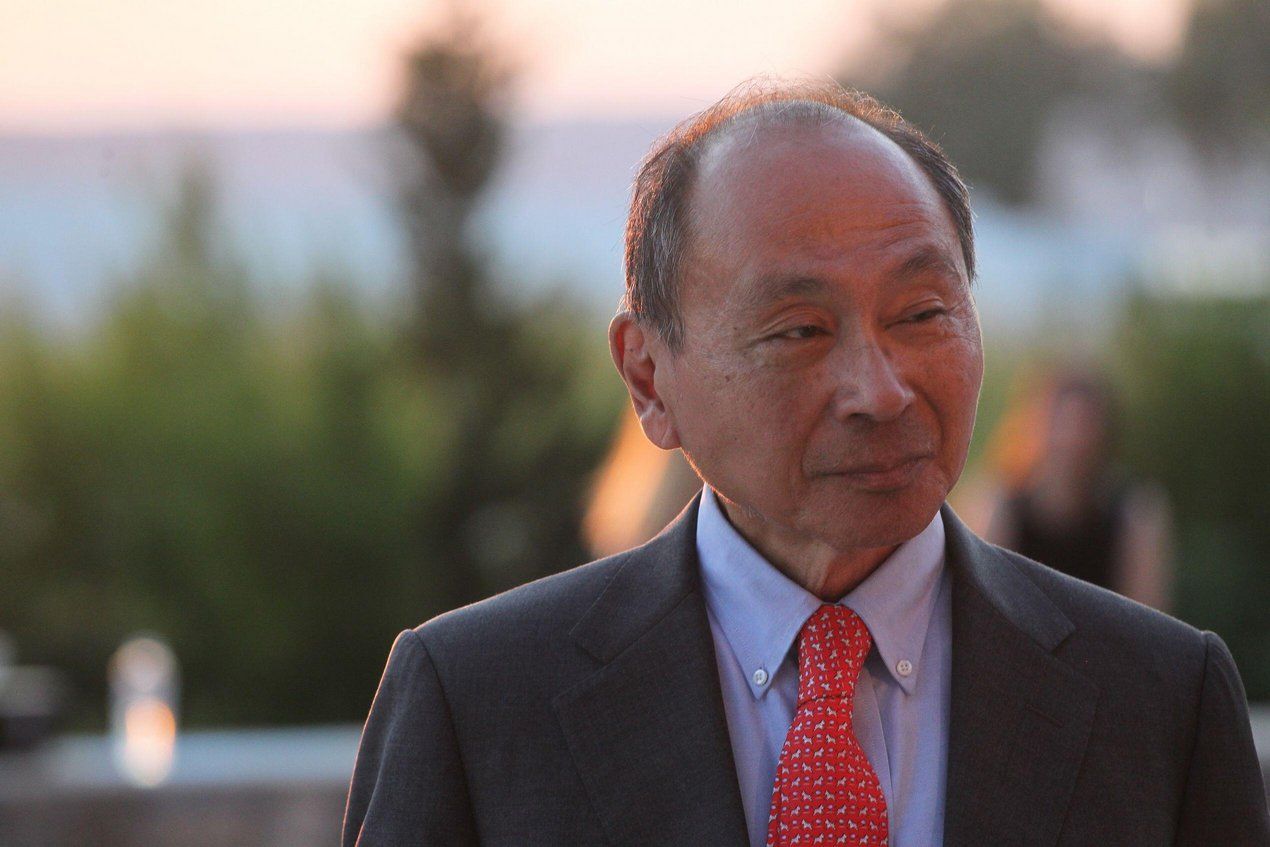

A Review of Liberalism and Its Discontents by Francis Fukuyama. Profile Books, 178 pages (March 2022)
Liberalism is in bad odour. In the third decade of the 21st century, it is an ideology with few friends. Derided with equal vigour by populists on the Right and “progressives” on the Left, it is no exaggeration to claim, as Francis Fukuyama does in his new book, Liberalism and its Discontents, that “liberalism is under severe threat around the world today.”
And yet, it was only just over 30 years ago that the same author—whose name is almost synonymous with liberal ideology—was proclaiming history’s “end.” Adopting Hegel’s historical teleology Fukuyama famously argued in 1992 that the fall of the Soviet Union marked the ultimate “end point of mankind’s ideological evolution and the universalisation of Western liberal democracy as the final form of human government.”
So, history, it turns out, did not actually end, but what’s wrong with liberalism? Is it broken? Can it be fixed? Or was it a mistake, in the first instance, to prophesy that liberalism was history’s “absolute moment”? Like 1848, did history reach its turning point and fail to turn because it had some other telos—socialist, fascist, nationalist, religious?
Never an uncritical supporter of liberalism—always aware of the cultural and psychological toll its victory necessarily exacts—Fukuyama has long conceded that there “are many legitimate criticisms to be made of liberal societies.” Nonetheless, echoing Winston Churchill on democracy, Fukuyama insists still that “liberalism is the worst form of government, except for all the others.”
In Liberalism and its Discontents, Fukuyama argues that the wrong kind of liberalism is what’s wrong with liberalism. Neoliberalism, namely, is what’s wrong with liberalism—that, and the idea of the “sovereign self” advanced in John Rawls’s left-leaning iteration of the political philosophy. Exchanging contingency for teleology, this is a Hegel-free Fukuyama, newly aware that “eternal vigilance is the price of liberty.”
Liberalism and its Discontents is a sterling book. Fukuyama provides there a rousing defence of “classical,” or “humane,” liberalism. It is a call for liberalism to moderate itself if it wishes to survive from someone, notably, firmly embedded within the liberal tradition.
Liberalism, on Fukuyama’s account, is a pessimistic politics. What we get in his new offering is, effectively, a species of the liberalism of fear. Classical liberalism, Fukuyama explains, can be understood “as an institutional solution to the problem of governing over diversity.” Classical liberalism is not without aspiration, however. Tolerance may be its most fundamental principle, but it is also individualist, egalitarian, universalist, and meliorist. Which is to say, while classical liberalism is realistic about the human propensity for discord and violence, it is idealistic about the need for political equality and our potential for collective improvement. Candid to a fault, Fukuyama distinguishes between liberalism and democracy. The heyday, he claims, of what came to be known as “liberal democracy,” classical liberalism’s apotheosis, was the period from 1950 to the 1970s. After that, liberalism began to unravel. Liberalism became self-destructive and even illiberal when its core principles were pushed to extremes.
Fukuyama’s critique of neoliberalism is powerful and well executed. However, there is nothing new there. The Reagan–Thatcher revolution addressed, and solved, real problems. Yet, Fukuyama points to its unintended, and intended but adverse, consequences. Free trade leads to the expansion of markets and efficiency. It also leads to job losses for skilled workers in rich countries. Immigration, similarly, improves aggregate welfare. But, unsurprisingly, “few voters think in terms of aggregate wealth.” “A valid insight into the superior efficiency of markets evolved into something of a religion,” he notes, where natural monopolies were privatised, markets recommended for states without functioning legal systems, and deregulation applied to the financial sector. Neoliberalism, consequently, was hoiste by its own petard.
It is not just a question of misapplication, however. Neoliberalism, according to Fukuyama, is congenitally flawed.
First, channelling Henry George, Fukuyama questions if a singular focus on property rights is just. “What if that property was acquired by violence or theft,” he asks rhetorically. Second, Fukuyama argues that neoliberalism’s emphasis on “consumer welfare as the ultimate measure of economic well-being” betrays an ideology with its values out of kilter. Invoking Justice Louis Brandeis’s political interpretation of the Sherman Act, Fukuyama posits that social goods like neighbourhoods and ways of living ought to trump economic efficiency. Third, neoliberalism’s foundational assumption that human beings are “rational utility maximisers” is profoundly incomplete, he states. We do, indeed, often act as selfish individuals, but individualism is a modern phenomenon, not a historical constant, and people are perpetually making choices “between material self-interest and intangible goods like respect, pride, principle, and solidarity.” We are, in short, social and emotional as well as selfish and rational creatures.
Who knew? Well, if this all seems obvious to liberalism’s longstanding critics—conservative, socialist, social democrat—Fukuyama’s critique of left liberalism is genuinely novel. Fukuyama proceeds to eviscerate the form of identity politics that emerged initially as “an effort to fulfil the promise of liberalism” but descended instead into a state of psychosis, plagued by patricidal imaginings. It is here that the book excels.
In Fukuyama’s synoptic intellectual history, Rawls is a bridge to nihilism and wokeism. Unlike Lockean–Jeffersonian liberalism, which “enjoined tolerance for different conceptions of the good,” Rawls enjoined “non-judgementalism regarding other people’s life choices.” Placing justice prior to the good, swapping a theory of human nature for an abstract “original position,” autonomy was absolutised. Choice was elevated to first place among human goods, with devastating consequences. Character formation was neglected, and life, unbound from tradition and inherited social roles, was emptied of meaning. Fukuyama doesn’t use the phrase, but he might as well have: Rawlsian liberalism created a culture of narcissism. “Freedom to choose,” he complains, extends now not “just to the freedom to act within established moral frameworks, but to choose the framework itself.” In other words, anything goes. Indeed, the more non-conforming, the better.
When told that the individual is sovereign and that our task in life is to “self-actualise,” modern liberal subjects are predictably self-indulgent. They often behave like “the spoiled child of human history” described by José Ortega y Gasset, incapable of wonder and respect. Failing to observe the principle of charity, contemporary critical theorists, for example, habitually mischaracterise their opponents’ arguments, erecting caricatures which are duly demolished with ease. Distinguishing between a good kind of identity politics and a deranged kind, Fukuyama answers point for point the objections levelled at liberalism by the latter.
Keep reading
Equal Pay, Unequal Work

The Genetics of Crime and Punishment
Jerry Kaplan on AI Doomers